The Long Legacy: The Cost and Continuance of Indigenous Resistance
Improve listing
Presented by
Boston Public LIbrary and the Partnership of Historic Bostons
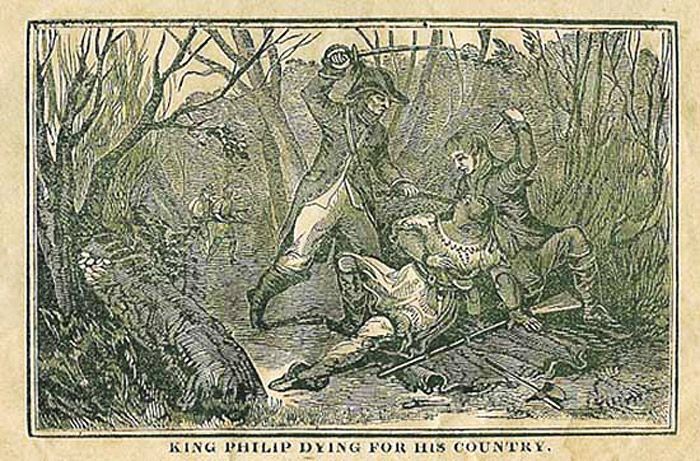
In collaboration with the Partnership of Historic Bostons we present a panel of Indigenous speakers to ask how do we reckon with the legacy of King Philip's War today? This event is hybrid and will also be live-streamed.
Forced displacement, enslavement, land seizures and dispossession, a global diaspora and suppression of languages — the war that bore the name of Metacom, or Philip, left a long and devastating trail of destruction.
Indigenous communities, including the Wampanoag, Nipmuc, Narragansett, Massachusett, Abenaki, and other Algonquian-speaking peoples, became refugees in their own land. People suffered the deaths of respected tribal leaders, warriors, and countless noncombatants, enslavement, and widespread displacement. Many actions during the war carried out by the United Colonies (Massachusetts, Plymouth, and Connecticut), with the aid of Indigenous allies, were deliberate and excessive, intended to remove Native peoples from their homelands and pave the way for colonial occupation. King Philip’s war not only enabled 17th century colonial expansion but laid the foundation for the American Revolution and beyond.
This intertribal panel, The Long Legacy: The Cost and Continuance of Indigenous Resistance, explores the lasting consequences of the war for Indigenous people across the region: its human and cultural costs, its role in shaping American history, and the resilience and survivance of Native people.
Speakers include Mack Scott, Narragansett, visiting assistant professor of slavery and justice at Brown University; Kimberly Toney, Hassanamisco Band of Nipmuc, coordinating curator for Native American and Indigenous collections, Brown University; Paula Peters, Masheppe Wampanoag, Communications and Programs Coordinator of the Native Land Conservancy. The moderator is Cheryll Toney Holley, sonksq of the Hassanamisco Band of Nipmuc and winner of multiple awards including an honorary doctorate for public service.
PANELISTS
As sonksq (female leader) of the Hassanamisco Nipmuc Band as well as a researcher, writer and speaker, Cheryll Toney Holley advocates for economic and social justice in all aspects of her community, including land-back opportunities, education and language reclamation. She is a co-founder and board member of the nonprofit Nipmuc Indian Development Corporation (NIDC) and a former director of the Hassanamisco Indian Museum, located on the tribe’s Hassanamesit reservation. For ten years she served on the Massachusetts Commission on Indian Affairs. Currently she is a member of the Commonwealth’s Environmental Justice Council and of the Worcester Black History Project. Holley has a BA in history and an honorary doctorate in public service from the University of Massachusetts, Amherst. She is the recipient of multiple awards including the Mass Humanities Governor’s Award. A veteran and a mom of four and grandmother of eight, she currently lives in Worcester, where generations of her family lived before her.
Kimberly Toney is an enrolled member of the Hassanamisco Band of Nipmuc and is the inaugural coordinating curator of Native American and Indigenous collections, jointly appointed to the John Carter Brown and John Hay Libraries at Brown University. Kim has worked in special collections libraries for more than 15 years, including as head of readers’ services and director of Indigenous initiatives at the American Antiquarian Society on Nipmuc homelands in Worcester, Massachusetts. Kim is co-chair of the newly formed Nipmuc Community Land Project and regularly serves as a consultant to cultural heritage institutions across southern New England. Her own research and personal interests include language and cultural reclamation, the intersections of Black and Indigenous histories in the Northeast, connecting Indigenous knowledges and practices to scholarly endeavors, and land back.
Mack H. Scott III is an enrolled member of the Narragansett Indian Tribe (Nation), historian, educator, and public scholar specializing in Native American and Indigenous histories, with a particular focus on the Dawnland/Narragansett country and the intersections of indigeneity, race, memory, and futurity. His work bridges academic research and public history, centering Indigenous agency, survivance, and the ethical responsibilities of historical storytelling. His scholarship appears in journals such as Ethnohistory and the Journal of Contemporary History, and he is the author of the forthcoming work The Great Tee and the Summer Sun: Indigeneity and Futurity in the Narragansett Country. He currently serves as director of undergraduate studies for the Native American and Indigenous studies initiative and as a visiting assistant professor at the Ruth J. Simmons Center for the Study of Slavery and Justice at Brown University.
Paula Peters is a politically, socially and culturally active citizen of the Mashpee Wampanoag Tribe. For more than a decade she worked as a journalist for the Cape Cod Times and is now co-owner of SmokeSygnals, a Native owned and operated creative production agency. As an independent scholar and writer of Native, and particularly Wampanoag history, she produced the traveling exhibit “Our”Story: 400 Years of Wampanoag History and The Wampum Belt Project documenting the art and tradition of wampum in the contemporary Wampanoag community. In 2020 she wrote the introduction to the 400th Anniversary Edition of William Bradford’s, Of Plimoth Plantation. Paula is also the executive producer of the 2016 documentary film Mashpee Nine and author of the companion book, a story of law enforcement abuse of power and cultural justice in the Wampanoag community in 1976. Paula lives with her husband and children in Mashpee, Massachusetts, the Wampanoag ancestral homeland.